

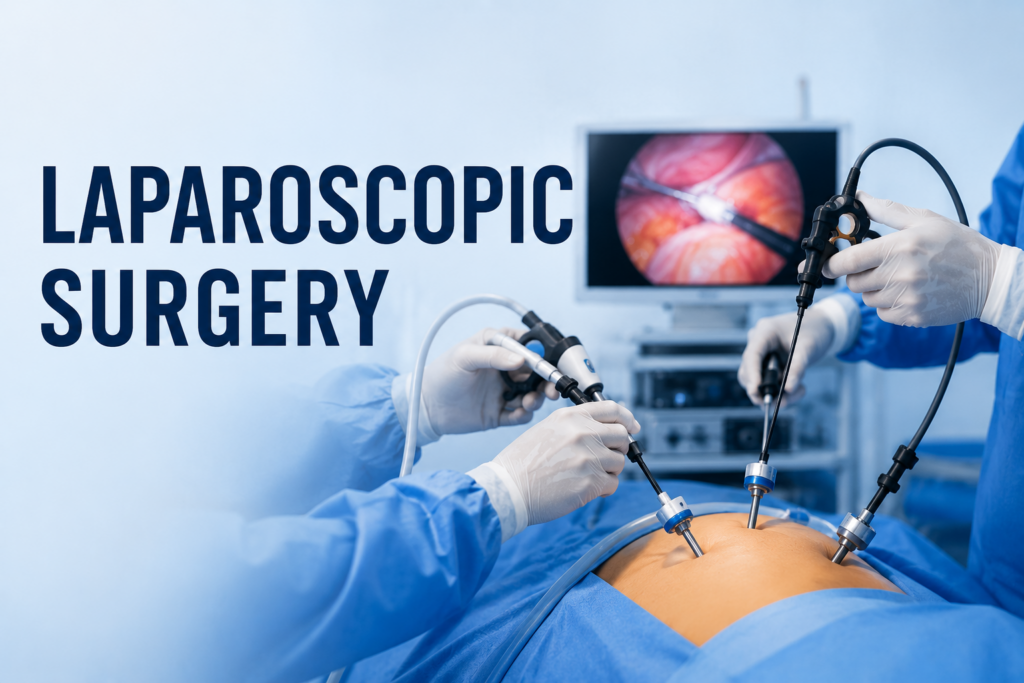
What Is Laparoscopic Surgery?
Laparoscopic surgery, also known as minimally invasive surgery (MIS) or keyhole surgery, is a modern surgical technique that allows surgeons to perform a wide range of operations through several small incisions rather than the large incision required in traditional open surgery. By minimizing tissue disruption, laparoscopic surgery has transformed surgical practice across multiple specialties, including general surgery, bariatric surgery, gynecology, urology, and colorectal surgery.
At the core of laparoscopic surgery is the laparoscope, a long, thin instrument equipped with a high-definition camera and a powerful fiber-optic light source. The laparoscope is inserted through a small incision, typically measuring 5-12 mm, and transmits real-time, magnified images of the internal organs to a high-resolution monitor. This enhanced visualization enables surgeons to perform complex procedures with exceptional precision while preserving surrounding healthy tissues.
Unlike conventional open surgery, where a large incision is often necessary to provide direct access to the surgical site, laparoscopic surgery relies on specialized long instruments inserted through additional small ports called trocars. These instruments allow the surgeon to dissect tissue, control bleeding, remove diseased organs, and perform delicate surgical maneuvers while viewing the operative field on a monitor.
The term minimally invasive surgery describes a broader category of surgical techniques designed to reduce surgical trauma. Laparoscopic surgery represents one of the most established and widely practiced forms of minimally invasive surgery, while robotic-assisted surgery and other image-guided techniques are considered advanced extensions of the same surgical philosophy. The primary objective of all minimally invasive procedures is to achieve the same or better surgical outcomes as open surgery while reducing patient morbidity.
Over the past three decades, laparoscopic surgery has become the preferred approach for many abdominal and pelvic procedures because it offers numerous clinical advantages. Patients typically experience less postoperative pain, reduced blood loss, a lower risk of wound infection, shorter hospital stays, faster recovery, earlier return to normal daily activities, and improved cosmetic outcomes due to the smaller incisions. These benefits have contributed to the widespread adoption of laparoscopic techniques as the standard of care for many elective and emergency surgical procedures.
Today, advances in high-definition imaging systems, sophisticated laparoscopic instruments, and innovative energy devices continue to expand the capabilities of laparoscopic surgery, allowing surgeons to perform increasingly complex operations with greater precision, safety, and efficiency.
How Does Laparoscopic Surgery Work?
Laparoscopic surgery is performed using advanced imaging technology and specialized surgical instruments that allow the surgeon to operate inside the body without creating a large incision. Instead of directly viewing the organs through an open wound, the surgeon performs the entire procedure while observing a magnified, high-definition image displayed on a surgical monitor. This approach improves visualization while minimizing trauma to the surrounding tissues.
The procedure begins after the patient receives general anesthesia, ensuring complete comfort and immobility throughout the operation. Once the patient is properly positioned and the surgical area has been sterilized, the surgeon creates one or more small incisions, typically ranging from 5 to 12 millimeters in length. These small openings serve as access points for the laparoscope and specialized surgical instruments.
To create adequate working space inside the abdominal cavity, carbon dioxide (CO₂) is gently introduced through a trocar using an insufflation system. This process, known as pneumoperitoneum, elevates the abdominal wall away from the internal organs, providing the surgeon with a clear operative field and sufficient room to manipulate instruments safely.
The laparoscope, which contains a high-definition camera and fiber-optic light source, is then inserted through one of the trocars. The camera continuously transmits magnified images of the internal organs to large surgical monitors, allowing the operating team to visualize anatomical structures in remarkable detail. The enhanced visualization offered by modern laparoscopic systems often exceeds what can be seen with the naked eye during conventional open surgery.
Additional trocars are placed as needed to introduce specialized laparoscopic instruments, including graspers, dissectors, scissors, needle holders, suction-irrigation devices, and tissue retractors. Depending on the complexity of the procedure, surgeons may also employ advanced energy devices designed for precise tissue dissection and secure vessel sealing. Modern technologies such as Harmonic Scalpel, LigaSure, and Thunderbeat have significantly improved the efficiency of laparoscopic surgery by combining tissue cutting with effective hemostasis, reducing operative time and minimizing thermal injury to surrounding tissues. Comparative studies have shown that each energy platform offers distinct advantages depending on the type of procedure and surgical objectives.
Once the necessary surgical steps have been completed, the surgeon carefully inspects the operative field to confirm adequate hemostasis and ensure that no complications are present. Surgical specimens, when required, are removed through one of the existing port sites, sometimes after slightly enlarging a single incision to facilitate extraction.
Finally, the carbon dioxide gas is released from the abdominal cavity, all laparoscopic instruments and trocars are removed, and the small skin incisions are closed using sutures, surgical adhesive, or sterile adhesive strips. Because the incisions are significantly smaller than those used in traditional open surgery, patients generally experience less postoperative discomfort, recover more quickly, and have minimal scarring.
History of Laparoscopic Surgery
The history of laparoscopic surgery reflects more than a century of continuous innovation in surgical science and medical technology. What began as a diagnostic technique for visualizing the abdominal cavity has evolved into one of the most significant advances in modern minimally invasive surgery, fundamentally changing the way surgeons perform complex operations across nearly every surgical specialty.
The origins of laparoscopy date back to the early twentieth century, when physicians first explored methods of examining the abdominal cavity using endoscopic instruments. Early procedures were limited by poor illumination, rudimentary optics, and the absence of suitable surgical instruments, restricting laparoscopy primarily to diagnostic applications rather than therapeutic interventions.
Significant progress occurred during the latter half of the twentieth century with the development of fiber-optic lighting, improved lens systems, and miniature video cameras. These technological breakthroughs dramatically enhanced image quality and enabled surgeons to visualize internal anatomy with greater clarity than ever before. As a result, laparoscopy gradually transitioned from a diagnostic procedure to a practical surgical technique capable of treating a wide range of diseases.
A major turning point in the history of laparoscopic surgery came in 1987, when French surgeon Philippe Mouret successfully performed the first laparoscopic cholecystectomy (gallbladder removal). This landmark achievement demonstrated that complex abdominal operations could be safely completed through small incisions while providing patients with faster recovery and fewer postoperative complications compared with conventional open surgery. The success of this procedure sparked a global transformation in surgical practice.
Throughout the 1990s, rapid improvements in camera systems, laparoscopic instruments, insufflation devices, and surgeon training accelerated the adoption of laparoscopic surgery worldwide. Procedures that had traditionally required large abdominal incisions, including appendectomy, hernia repair, colorectal surgery, bariatric surgery, gynecologic procedures, and urologic operations, were increasingly performed using minimally invasive techniques.
The twenty-first century has witnessed another wave of innovation, with the introduction of high-definition and 4K imaging, three-dimensional visualization, fluorescence-guided surgery, and sophisticated energy devices capable of simultaneously dissecting tissue and sealing blood vessels. Comparative research on technologies such as Thunderbeat, LigaSure, and the Harmonic Scalpel has further refined laparoscopic techniques by improving surgical precision, reducing blood loss, and enhancing operative efficiency in selected procedures.
Today, laparoscopic surgery is recognized as one of the cornerstones of minimally invasive surgery. It continues to evolve through advances in robotic-assisted platforms, artificial intelligence, image-guided navigation, and digital surgical technologies. As innovation continues, laparoscopic techniques are expected to play an even greater role in delivering safer, more precise, and more patient-centered surgical care across a broad spectrum of medical specialties.
Components of the Laparoscopic System
The success of laparoscopic surgery depends not only on the surgeon’s expertise but also on a sophisticated integrated system of specialized equipment. Modern laparoscopic systems combine advanced imaging technology, precision surgical instruments, and energy devices to provide surgeons with exceptional visualization and control throughout the procedure. Each component plays a critical role in ensuring patient safety, surgical accuracy, and optimal clinical outcomes.
Laparoscope
The laparoscope is the primary visualization instrument used during laparoscopic surgery. It is a long, narrow telescope equipped with high-quality optical lenses that transmit images from inside the body. Modern laparoscopes are available in various diameters and viewing angles, allowing surgeons to obtain optimal visualization depending on the procedure being performed.
Camera System
A high-definition digital camera is attached to the laparoscope to capture and transmit real-time images to the operating room monitors. Advances in camera technology, including Full HD, 4K, and three-dimensional imaging, have significantly improved depth perception, anatomical recognition, and surgical precision.
Light Source
Since the abdominal cavity is naturally dark, a powerful fiber-optic or LED light source illuminates the operative field through the laparoscope. Consistent, high-intensity illumination is essential for accurately identifying tissues, blood vessels, and critical anatomical structures.
Video Monitor
The images captured by the laparoscope are displayed on one or more high-resolution monitors positioned within the operating room. Rather than looking directly at the patient, surgeons perform the entire operation while viewing these magnified images, enabling highly precise movements even within confined anatomical spaces.
CO₂ Insufflation System
A carbon dioxide insufflator delivers and maintains a controlled flow of CO₂ gas into the abdominal cavity, creating a working space known as pneumoperitoneum. Stable insufflation pressure improves visualization, facilitates instrument movement, and helps protect surrounding organs during surgery.
Trocars and Cannulas
Trocars are specialized access devices inserted through small skin incisions to create ports for the laparoscope and surgical instruments. Depending on the procedure, surgeons may use trocars of varying diameters, typically ranging from 5 mm to 12 mm.
Laparoscopic Instruments
Unlike conventional surgical instruments, laparoscopic instruments are long and slender to allow manipulation through narrow ports. Common instruments include graspers, dissectors, scissors, clip appliers, suction-irrigation systems, needle holders, and retractors. Their ergonomic design enables surgeons to perform delicate maneuvers with minimal tissue trauma.
Energy Devices
Modern laparoscopic surgery frequently utilizes advanced energy platforms to simultaneously cut tissue and seal blood vessels while minimizing bleeding and thermal damage. Common technologies include:
- Monopolar Electrosurgery
- Bipolar Electrosurgery
- LigaSure™ Vessel Sealing System
- Harmonic Scalpel
- Thunderbeat
Comparative studies have demonstrated that advanced energy devices differ in vessel-sealing capability, thermal spread, operative efficiency, and tissue dissection performance. The choice of device depends on the type of procedure, tissue characteristics, surgeon preference, and clinical objectives.
Types of Laparoscopic Surgery
Over the past several decades, laparoscopic surgery has evolved into a diverse group of minimally invasive techniques designed to address different diagnostic and therapeutic needs. The choice of laparoscopic approach depends on the patient’s condition, the complexity of the procedure, and the surgeon’s expertise.
Diagnostic Laparoscopy
Diagnostic laparoscopy is performed to directly examine the abdominal or pelvic cavity when imaging studies alone cannot establish a definitive diagnosis. It is commonly used to investigate unexplained abdominal pain, infertility, liver disease, endometriosis, abdominal trauma, and certain cancers while allowing tissue biopsy when necessary.
Operative Laparoscopy
Operative laparoscopy involves performing definitive surgical treatment through minimally invasive techniques. It has become the standard approach for numerous procedures, including gallbladder removal, appendectomy, hernia repair, bariatric surgery, colorectal surgery, and gynecologic operations.
Advanced Laparoscopic Surgery
Advanced laparoscopic surgery encompasses highly complex procedures requiring specialized surgical training and sophisticated equipment. These operations often involve intricate dissection, reconstruction, or removal of major organs and include procedures such as gastric bypass, colorectal resections, adrenal surgery, pancreatic surgery, liver resections, and anti-reflux surgery.
Single-Incision Laparoscopic Surgery (SILS)
Single-incision laparoscopic surgery is performed through a single opening, usually concealed within the umbilicus. By reducing the number of incisions, SILS may improve cosmetic outcomes while maintaining the principles of minimally invasive surgery, although it presents additional technical challenges.
Robotic-Assisted Laparoscopic Surgery
Robotic-assisted laparoscopy represents an advanced form of minimally invasive surgery in which robotic technology enhances the surgeon’s dexterity, precision, and visualization. Although the surgeon remains in complete control, robotic systems provide articulated instruments, tremor filtration, and three-dimensional imaging that may benefit selected complex procedures.
Common Procedures Performed Laparoscopically
Today, laparoscopic surgery is used across numerous surgical specialties and has become the preferred approach for many abdominal and pelvic operations. Continuous advances in imaging systems, instrumentation, and energy technologies have significantly expanded the range of procedures that can be safely performed using minimally invasive techniques.
Common laparoscopic procedures include:
General Surgery
- Laparoscopic cholecystectomy (gallbladder removal)
- Laparoscopic appendectomy
- Laparoscopic inguinal and ventral hernia repair
- Splenectomy
- Adrenalectomy
Bariatric Surgery
- Laparoscopic sleeve gastrectomy
- Laparoscopic Roux-en-Y gastric bypass
- One Anastomosis Gastric Bypass (OAGB)
- SASI bypass
- Revisional bariatric surgery
Colorectal Surgery
- Colectomy
- Sigmoidectomy
- Low anterior resection
- Rectal cancer surgery
Upper Gastrointestinal Surgery
- Hiatal hernia repair
- Fundoplication for gastroesophageal reflux disease (GERD)
- Gastric tumor resection
Gynecologic Surgery
- Hysterectomy
- Ovarian cystectomy
- Endometriosis surgery
- Treatment of ectopic pregnancy
- Myomectomy
Urologic Surgery
- Nephrectomy
- Pyeloplasty
- Prostate surgery
- Adrenal surgery
As technology continues to advance, increasingly complex procedures are being performed laparoscopically, providing patients with the benefits of minimally invasive surgery without compromising surgical effectiveness.
Advantages of Laparoscopic Surgery
The widespread adoption of laparoscopic surgery has been driven by its ability to achieve outcomes comparable to, and in many cases superior to, traditional open surgery while significantly reducing surgical trauma. Numerous clinical studies have demonstrated that minimally invasive techniques improve both short-term recovery and overall patient experience.
Compared with open surgery, laparoscopic surgery offers several important advantages:
- Smaller skin incisions and improved cosmetic outcomes
- Reduced postoperative pain and discomfort
- Less blood loss during surgery
- Lower risk of wound infection
- Reduced tissue trauma
- Shorter hospital stay
- Faster return to normal daily activities and work
- Earlier recovery of bowel function
- Lower incidence of postoperative adhesions in selected procedures
- Improved visualization through magnified high-definition imaging
- Reduced need for postoperative pain medication
- Enhanced patient satisfaction and quality of recovery
For these reasons, laparoscopic surgery has become the preferred surgical approach whenever it is technically feasible and clinically appropriate.
Limitations and Challenges
Despite its many advantages, laparoscopic surgery is not suitable for every patient or every clinical situation. Successful outcomes depend on careful patient selection, appropriate surgical planning, and the experience of the operating team.
Several limitations should be considered:
- A significant learning curve is required for surgeons to develop advanced laparoscopic skills.
- Specialized equipment and operating room infrastructure increase procedural costs.
- Reduced tactile feedback compared with open surgery may make certain dissections more challenging.
- Complex anatomy, extensive adhesions, or severe inflammation may limit the feasibility of a laparoscopic approach.
- Unexpected bleeding or intraoperative complications may require conversion to open surgery to ensure patient safety.
- Equipment malfunction or limited instrument mobility can occasionally complicate technically demanding procedures.
- Certain emergencies or advanced malignancies may still require conventional open surgery.
Although these challenges exist, continuous improvements in surgical training, imaging technology, and instrument design have steadily expanded the range of conditions that can be managed laparoscopically.
Risks and Possible Complications
Like all surgical procedures, laparoscopic surgery carries potential risks and complications. However, when performed by experienced surgeons using appropriate patient selection and modern surgical techniques, serious complications remain relatively uncommon.
Potential complications include:
Bleeding
Bleeding may occur from injured blood vessels during trocar insertion or tissue dissection. Most cases can be controlled laparoscopically, although severe bleeding may require conversion to open surgery.
Infection
Although the risk of surgical site infection is lower than in open surgery, wound infections and intra-abdominal infections can still occur.
Injury to Internal Organs
Adjacent organs such as the bowel, bladder, liver, spleen, ureters, or major blood vessels may rarely be injured during trocar placement or surgical dissection.
Carbon Dioxide – Related Complications
Because laparoscopic surgery requires insufflation of carbon dioxide, some patients may experience temporary shoulder pain, abdominal discomfort, or gas retention after surgery. Rare complications such as gas embolism or subcutaneous emphysema have also been reported.
Port-Site Hernia
Although uncommon, a hernia may develop at the site where larger trocars are inserted, particularly if the abdominal wall is not adequately closed.
Blood Clots
As with any major operation, there is a small risk of developing deep vein thrombosis (DVT) or pulmonary embolism, particularly in high-risk patients. Early mobilization and preventive measures significantly reduce this risk.
Anesthesia-Related Risks
General anesthesia may be associated with temporary nausea, vomiting, allergic reactions, respiratory complications, or cardiovascular events, depending on the patient’s overall health status.
Overall, laparoscopic surgery has an excellent safety profile, and for appropriately selected patients, the benefits of minimally invasive surgery generally outweigh the potential risks. Careful preoperative evaluation, adherence to established surgical protocols, and experienced surgical teams are essential for minimizing complications and achieving the best possible outcomes.
Who Is a Candidate for Laparoscopic Surgery?
Laparoscopic surgery is an excellent option for many patients requiring abdominal or pelvic surgery. However, eligibility depends on several factors, including the patient’s overall health, the underlying condition, previous surgical history, and the complexity of the procedure. The final decision is made after a thorough medical evaluation by the surgeon, Patients who may be suitable candidates for laparoscopic surgery include those undergoing:
- Gallbladder removal (cholecystectomy)
- Appendectomy
- Hernia repair
- Bariatric surgery
- Colorectal surgery
- Anti-reflux surgery
- Certain gynecologic and urologic procedures
While most patients benefit from a minimally invasive surgery approach, factors such as extensive scar tissue, severe infection, uncontrolled bleeding, or advanced disease may influence the choice of surgical technique.
When Is Open Surgery Preferred?
Although laparoscopic surgery is considered the preferred approach for many procedures, open surgery remains the safest and most appropriate option in certain situations. A surgeon may recommend open surgery when:
- The disease is highly advanced or involves multiple organs.
- Extensive scar tissue (adhesions) from previous surgeries limits laparoscopic access.
- Severe inflammation or infection obscures normal anatomy.
- Significant uncontrolled bleeding occurs during surgery.
- Large tumors require direct access for safe removal.
- Emergencies demand rapid surgical intervention.
- Patient-specific factors make minimally invasive surgery unsafe.
In some cases, a procedure may begin laparoscopically but be converted to open surgery if necessary to ensure the best possible outcome and patient safety.
Laparoscopic Surgery vs Open Surgery
Both laparoscopic surgery and open surgery are effective surgical approaches, and the best choice depends on the patient’s condition, the complexity of the procedure, and the surgeon’s clinical judgment. While laparoscopic surgery has become the preferred option for many operations due to its minimally invasive nature, open surgery remains essential in selected complex or emergency cases.
Laparoscopic Surgery
- Performed through several small incisions.
- Uses a high-definition camera and specialized instruments.
- Causes less postoperative pain.
- Typically results in less blood loss.
- Offers a shorter hospital stay.
- Allows faster recovery and return to daily activities.
- Leaves smaller, less noticeable scars.
- Generally has a lower risk of wound infection.
Open Surgery
- Requires a larger incision to access the surgical area directly.
- Provides direct visualization of organs and tissues.
- May be preferred for highly complex procedures or emergency situations.
- Can be more suitable when extensive adhesions, large tumors, or severe bleeding are present.
- Usually involves a longer recovery period and a higher level of postoperative discomfort.
Ultimately, the decision between laparoscopic surgery and open surgery should be individualized, balancing the patient’s condition, surgical goals, and overall safety.
Laparoscopic Surgery vs Robotic Surgery
Both laparoscopic surgery and robotic-assisted surgery are forms of minimally invasive surgery designed to reduce tissue trauma and promote faster recovery. The main difference lies in the technology used to perform the operation.
Laparoscopic Surgery
- The surgeon directly controls the laparoscopic instruments by hand.
- Uses a high-definition camera to visualize the surgical field.
- Proven safe and effective for a wide range of procedures.
- Widely available in most hospitals.
- More cost-effective than robotic surgery.
Robotic Surgery
- The surgeon controls robotic instruments from a specialized console.
- Provides enhanced dexterity and a greater range of instrument movement.
- Offers three-dimensional, high-definition visualization.
- Can improve precision during selected complex procedures.
- Typically involves higher equipment and operating costs.
- Availability may be limited to specialized medical centers.
Both approaches provide the benefits of minimally invasive surgery, and neither is universally superior. The most appropriate technique depends on the patient’s condition, the complexity of the procedure, and the surgeon’s experience with each technology.
Preparation Before Laparoscopic Surgery
Proper preparation is essential to ensure the safety and success of laparoscopic surgery. Before the procedure, your surgeon and healthcare team will provide detailed instructions based on your medical condition and the type of operation being performed.
Common preoperative preparations include:
- Undergoing a complete medical evaluation and physical examination.
- Completing required laboratory tests and imaging studies.
- Review all current medications with your healthcare provider.
- Temporarily stopping certain medications, such as blood thinners, if advised.
- Following fasting instructions before surgery, typically avoiding food and drinks for several hours.
- Quitting smoking whenever possible to promote better healing and reduce postoperative complications.
- Discussing anesthesia, potential risks, and the expected recovery process with your surgical team.
Carefully following these instructions can help minimize complications and support a smoother surgical experience.
Recovery After Laparoscopic Surgery
Recovery after laparoscopic surgery is generally faster than after traditional open surgery, although the exact timeline varies depending on the procedure and the patient’s overall health. During recovery, patients can generally expect to:
- Experience mild pain or discomfort around the incision sites for a few days.
- Begin walking shortly after surgery to improve circulation and reduce the risk of blood clots.
- Resume eating gradually as recommended by the healthcare team.
- Keep the incision sites clean and dry to promote proper healing.
- Avoid heavy lifting and strenuous physical activity until cleared by the surgeon.
- Return to normal daily activities and work sooner than after open surgery, depending on the type of procedure.
Attending follow-up appointments is important to monitor healing and ensure a successful recovery.
Warning Signs After Surgery
Although most patients recover without complications, it is important to seek medical attention immediately if any of the following symptoms occur after laparoscopic surgery:
- Persistent or worsening abdominal pain.
- Fever or chills.
- Redness, swelling, or discharge from the incision sites.
- Excessive bleeding from the surgical wounds.
- Persistent nausea or vomiting.
- Difficulty breathing or chest pain.
- Severe abdominal swelling.
- Inability to pass urine or bowel movements for an extended period, if accompanied by significant discomfort.
Early recognition of these warning signs allows prompt medical evaluation and helps reduce the risk of serious complications.
FAQS
Is laparoscopic surgery safe?
Yes. Laparoscopic surgery is considered a safe and effective surgical approach when performed by an experienced surgeon. Like any surgical procedure, it carries some risks, but serious complications are uncommon, and most patients recover without significant problems.
Can all surgeries be performed laparoscopically?
No. While many procedures can be performed using laparoscopic surgery, some complex cases, emergency conditions, or advanced diseases may require traditional open surgery for the safest and most effective treatment.
Is laparoscopic surgery painful?
Most patients experience only mild to moderate discomfort after laparoscopic surgery. Because the incisions are small, postoperative pain is usually less severe than with open surgery and can often be managed with prescribed pain medications.
How long does laparoscopic surgery take?
The duration of laparoscopic surgery depends on the type and complexity of the procedure. Most operations typically last between 30 minutes and 3 hours, although some advanced procedures may take longer.
How long does recovery take after laparoscopic surgery?
Recovery time varies depending on the procedure and the patient’s overall health. Many patients return to normal daily activities within 1 to 3 weeks, while more complex operations may require a longer recovery period.
Does laparoscopic surgery leave scars?
Yes, but the scars are usually very small and become less noticeable over time. Since laparoscopic surgery requires only a few small incisions, cosmetic results are generally much better than with traditional open surgery.
When can I return to work after laparoscopic surgery?
Many patients can return to work within one to two weeks, depending on the type of surgery and the physical demands of their job. Your surgeon will recommend the most appropriate timeline based on your recovery.
Is laparoscopic surgery better than open surgery?
In many cases, laparoscopic surgery offers advantages such as less pain, smaller scars, shorter hospital stays, and faster recovery. However, open surgery may still be the better option for certain complex or emergency situations.
Can laparoscopic surgery be converted to open surgery during the procedure?
Yes. In some cases, the surgeon may decide to convert to open surgery if unexpected bleeding, difficult anatomy, or other complications arise. This decision is made to ensure the safest possible outcome for the patient.
Can laparoscopic surgery be repeated if needed?
Yes. Laparoscopic surgery can often be performed again if medically necessary, depending on the patient’s condition, previous surgeries, and the presence of scar tissue or adhesions.
Is laparoscopic surgery suitable for older adults?
Yes. Age alone is not a contraindication for laparoscopic surgery. Many older adults successfully undergo minimally invasive procedures, provided they are medically fit for anesthesia and surgery.
Is laparoscopic surgery suitable for patients with obesity?
Yes. In fact, laparoscopic surgery is commonly used for patients with obesity, including bariatric procedures such as sleeve gastrectomy and gastric bypass. Compared with open surgery, the minimally invasive approach may reduce wound complications and support a faster recovery in appropriately selected patients.


